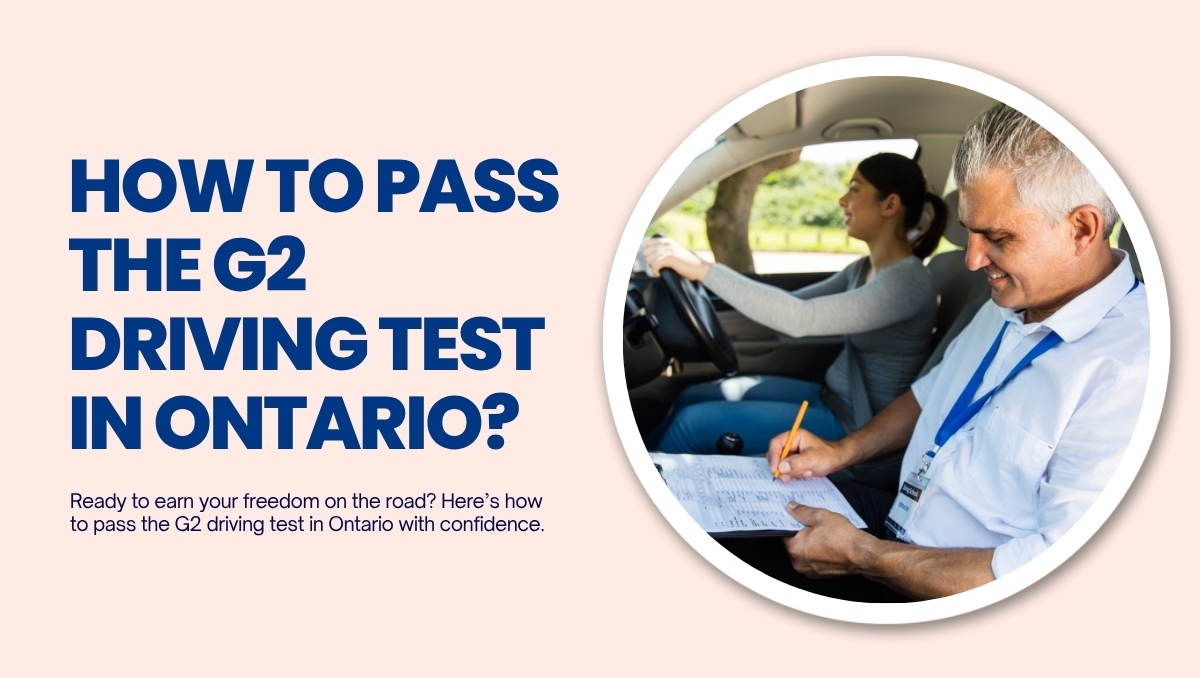
Ready to get your G2 licence in Ontario? It’s the next step to driving on your own. If you want to know how to pass the G2 driving test in Ontario, the best thing is to practice and know what to expect.
You’ll need to show you can park, change lanes, stop at stops, and join traffic safely. It might feel hard at first, but practicing and staying calm will help a lot.
The test just checks if you’re a safe driver, not to trick you. With some practice, you can pass your G2 test and start enjoying driving by yourself!
This guide will help you:
Understand eligibility and requirements for the G2 test
Master the most important driving skills and maneuvers
Avoid common mistakes that lead to failure
Navigate the test day with confidence
Learn what to do if you don’t pass on your first attempt
Why the G2 Test Matters?
The G2 test is more than just a milestone; it’s your gateway to driving independence in Ontario.
Independence
A G2 licence allows you to drive unaccompanied across Ontario. Whether it’s late-night shifts, weekend getaways, or emergency errands, you won’t have to rely on someone else or public transit.
Insurance Savings
Graduating from G1 to G2 can reduce your auto insurance premium by 10–15%, especially if you’ve also completed an MTO-approved driver training course.
Path to Full G Licence
Passing your G2 test brings you closer to earning your full G licence, which further expands your driving rights, including highway driving, towing privileges, and no time-of-day restrictions.
Ontario’s Graduated Licensing System: G1 → G2 → G
Ontario’s licensing system is designed to ensure new drivers gain experience gradually:
G1 Licence (Level 1): Learner’s permit; valid for 12 months. Requires a fully licensed driver with 4+ years of experience in the passenger seat.
G2 Licence (Level 2): Intermediate licence; valid for 12–60 months. Allows unsupervised driving but still has some restrictions.
G Licence: Full licence with no restrictions. Requires passing a more advanced road test (G test), including highway driving.
How to pass the G2 driving test in Ontario?
Ready to ditch the passenger seat? Discover how to pass the G2 driving test in Ontario and take control of the road with confidence.
Understanding the G2 Test
Think the G2 test is just another drive around the block? Understanding what’s really being tested can make the difference between passing and starting over.
Eligibility Requirements
Before you book your G2 test, make sure:
You’ve held your G1 licence for at least 12 months (or 8 months with completion of an MTO-approved driving course).
You meet vision standards: A minimum of 20/50 vision with or without glasses/contact lenses.
You are in good physical and mental health for safe driving.
G2 Test Format and Duration
Test Type: City driving test; no highway or expressway driving is included.
Duration: 20–30 minutes on average.
Environment: Conducted on regular city roads, with school zones, intersections, and residential streets.
Skills and Maneuvers Evaluated
The G2 test assesses how well you:
Start and stop smoothly
Obey speed limits
Change lanes safely
Make controlled turns (right and left)
Park (parallel and angle)
Perform three-point turns
Use mirrors and blind spots
Handle intersections and four-way stops
Pass/Fail Criteria
Automatic Fails: Rolling through stop signs, failing to yield, causing unsafe situations, collisions, or driving on the wrong side of the road.
Minor Mistakes: A few small errors, like forgetting to signal once or stopping a bit too far from a stop line, may not cause you to fail. But making the same mistakes over and over can.
Preparing Your Knowledge and Mindset
Ready to succeed? Laying a strong foundation of rules and confidence is your first step to acing the G2.
Review the Ontario Driver’s Handbook
The handbook is your essential study guide. Focus especially on:
Traffic signs and rules
Parking procedures
Safe driving techniques
Intersections, right-of-way, and speed zones
Take notes, highlight important sections, and quiz yourself regularly.
Know the Test Routes and Centres
Each DriveTest centre has slightly different test routes. Some are known for being more difficult due to heavy traffic or complex intersections. In the GTA, testing centers like Metro East, Downsview, and Etobicoke are commonly used.
Ask instructors or previous test-takers about:
Frequent stop sign placements
Roundabouts
Busy school zones or tricky left turns
Reduce Anxiety and Build Confidence
Mental rehearsal: Visualize a smooth drive. Athletes use visualization to improve performance, and you can too.
Breathing techniques: Try deep, slow breathing before your test to calm nerves.
Confidence building: Think about the number of hours you’ve practiced. You’ve already done most of the hard work!
Practice with Checklists and Quizzes
Create checklists for:
Pre-driving vehicle checks
Parking sequence steps
Mirror-check timing
Shoulder checks
Use online G1/G2 simulation tests to improve your memory of signs, signals, and scenarios.
Essential Vehicle and Document Checklist
Before you turn the key, make sure your car and paperwork are fully test-ready with this essential vehicle and document checklist.
Required Documents
Your G1 licence
A second piece of photo ID (if needed)
Proof of test appointment or confirmation number (printed or written down)
Vehicle Requirements
The vehicle you use for the test must be:
Roadworthy with no mechanical issues
Registered and insured in Ontario
Equipped with working:
Headlights
Brake lights
Turn signals
Horn
Wipers
Seat belts
Emergency brake
Pre-Test Vehicle Inspection
Before leaving for your test:
Check tire pressure and tread
Ensure all lights are working
Test the horn, brakes, and steering
Confirm the windshield is clean, and wipers are functional
What to Bring on Test Day
Your glasses or contacts if needed for vision correction
A small water bottle to stay hydrated
Test fee (if not already paid)
A trusted friend or instructor to drive you there (if you’re nervous or legally restricted)
Practical Skills to Master
From smooth lane changes to precise parking, mastering these practical skills is your ticket to G2 success.
Smooth Starts, Stops, and Speed Control
Don’t slam the accelerator or brakes.
Stop gently and fully at stop signs and red lights.
Practice coasting to a stop. It helps you save fuel and shows the examiner that you’re in control.
Lane Changes and Shoulder Checks
Check rear-view, side mirror, then shoulder before switching lanes.
Always signal for at least 3 seconds.
Check blind spots every time, even if you think the coast is clear.
Parking Techniques
Parallel Parking
Practice until you can do it within 30–60 seconds.
You must be within 30 cm (1 foot) of the curb without touching it.
Angle Parking
Enter slowly and adjust midway if you’re too far from the line.
Three-Point Turns (K-Turns)
Signal before turning across the road.
Ensure you’re in a safe, low-traffic area.
Turn into the opposing curb, reverse into your original lane, then complete the turn.
Navigating Intersections and Roundabouts
Yield properly at four-way stops: whoever arrives first or is on the right has priority.
In roundabouts, always yield to traffic already inside.
Signal clearly when exiting.
Highway Driving (If Applicable)
Some test centres don’t require highway driving for the G2, but if yours does:
Merge at full speed
Check blind spots before changing lanes
Maintain a safe following distance of at least 2 seconds behind the vehicle in front. It gives you enough time to react if something unexpected happens.
Defensive Driving Basics
Always scan ahead for potential hazards (12–15 seconds ahead).
Keep a safe gap from the car in front. Never tailgate.
Anticipate pedestrian movements and brake early in school zones or near crosswalks.
Building Real-World Experience
Ready to take your skills beyond the parking lot? Hitting real roads in all conditions builds the confidence and adaptability you need to nail the G2 test.
Practice in Different Conditions
Day/Night driving
Rain or fog
Heavy traffic
Practice these with your instructor or a trusted G-licence driver.
Simulate the Real Test
Recreate the exact testing environment: same time of day, same vehicle, same location.
Have a friend act as the examiner and time you.
Practice routes near your chosen testing centre.
Keep Feedback Logs
After every drive:
Write down what went well and what didn’t.
Rate yourself on parking, lane changes, and signaling.
Set goals for your next drive based on weaknesses.
Use Public Resources
Use Google Maps Street View to check for complex intersections and school zones near the test centre.
Use weather apps and traffic alerts to avoid practice during storms or road work.
Test-Day Strategy
Stay calm and focused. Your test day strategy is the key to turning preparation into success behind the wheel.
Arrive Early
Get there 15–20 minutes before your appointment.
Park legally and find out where the check-in area is.
Use the washroom if needed and avoid rushing.
Warm-Up Drive
Take a 10-minute drive before your test to get comfortable with the car.
Practice a few turns and stops nearby.
During the Test
Listen carefully. If instructions are unclear, politely ask the examiner to repeat them.
Drive like you’ve practiced: calm, focused, and deliberate.
If you make a minor mistake, stay composed. Don’t let one slip-up ruin your performance.
Handling Mistakes
If you forget a shoulder check or hesitate, don’t panic:
Correct your mistakes (if possible) and keep going.
Examiners appreciate calm recovery more than perfection.
Scheduling Tips
Choosing the right time and location can make your G2 test smoother and less stressful. Use these scheduling tips to boost your chances of passing.
Choose less busy times: mid-morning to early afternoon (11 AM–3 PM), weekdays
Rural/test-centre options often have gentler roads & friendlier examiners
Final Checklist Before Your Test
One last review can make all the difference. Use this final checklist before your test to walk in prepared and drive out with confidence.
Revise the official Driver’s Handbook
Practice all manoeuvres with G S L approach
Mock test in your local test route
Vehicle safety and paperwork ready
Calm mind, confident posture, clear head-checks
Arrive early and greet examiner politely
Common Pitfalls and How to Avoid Them
Small mistakes can lead to big setbacks. Learn the most common G2 test pitfalls and how to avoid them for a smoother path to success.
Missed Mirror or Blind Spot Checks
Fix: Build a habit of checking mirrors every 5–8 seconds, and always shoulder-check before turns or lane changes.
Hesitation at Intersections
Fix: Approach slowly, stop fully, and proceed confidently when it’s your turn.
Improper Speed Control
Fix: Know the local speed limits and practice keeping a steady pace. Check your speedometer often to stay on track.
Poor Lane Discipline
Fix: Keep your car centred; use painted lines as guides and avoid swerving or drifting.
Failing to Signal
Fix: Signal for every maneuver, including turns, lane changes, and parking, even in empty lots.
Parking Mistakes
Fix: Practice with cones or markers. Ensure you’re straight, centered, and within the space.
If You Don’t Pass: Next Steps
Didn’t pass this time? Don’t worry. Here’s what to do next to get back on the road and ready for your next G2 test.
Examiner Feedback
After the test, you’ll receive a detailed score sheet:
Study it to understand what went wrong.
Focus your practice on the areas marked for improvement.
Targeted Practice
Revisit specific skills: parking, scanning, lane changes, or turning.
Book a lesson or two with a certified instructor for expert feedback.
Booking a Retest
You must wait at least 10 days before rebooking.
Use this time to polish your weaker areas.
Stay Positive and Motivated
Many skilled drivers didn’t pass on their first try.
Use your failure as fuel to improve. Keep track of improvements and celebrate small wins.
Conclusion and Final Tips
Passing the G2 test is all about preparation, practice, and a calm mindset. With the right approach and these final tips, you’ll be ready to take the wheel with confidence.
Quick Recap for Success
Study the handbook thoroughly.
Practice parking, turning, and defensive driving in various conditions.
Simulate test-day scenarios to boost confidence.
Stay calm and composed on the big day.
A Final Word of Encouragement
You’ve done the practice, learned the rules, and developed safe driving habits. Whether you pass on your first or second attempt, you’re on the road to independence.
More Resources to Explore
Ask your driving school for mock tests.
Practice with experienced drivers for extra tips.
Record your drives to review your performance later.
Share Your Story
When you pass your G2, celebrate it and share your story with others. You might inspire someone just like you.
Getting your G2 is a big step toward freedom, responsibility, and confidence on the road. You’ve got this. Drive safe, stay sharp, and trust your practice.